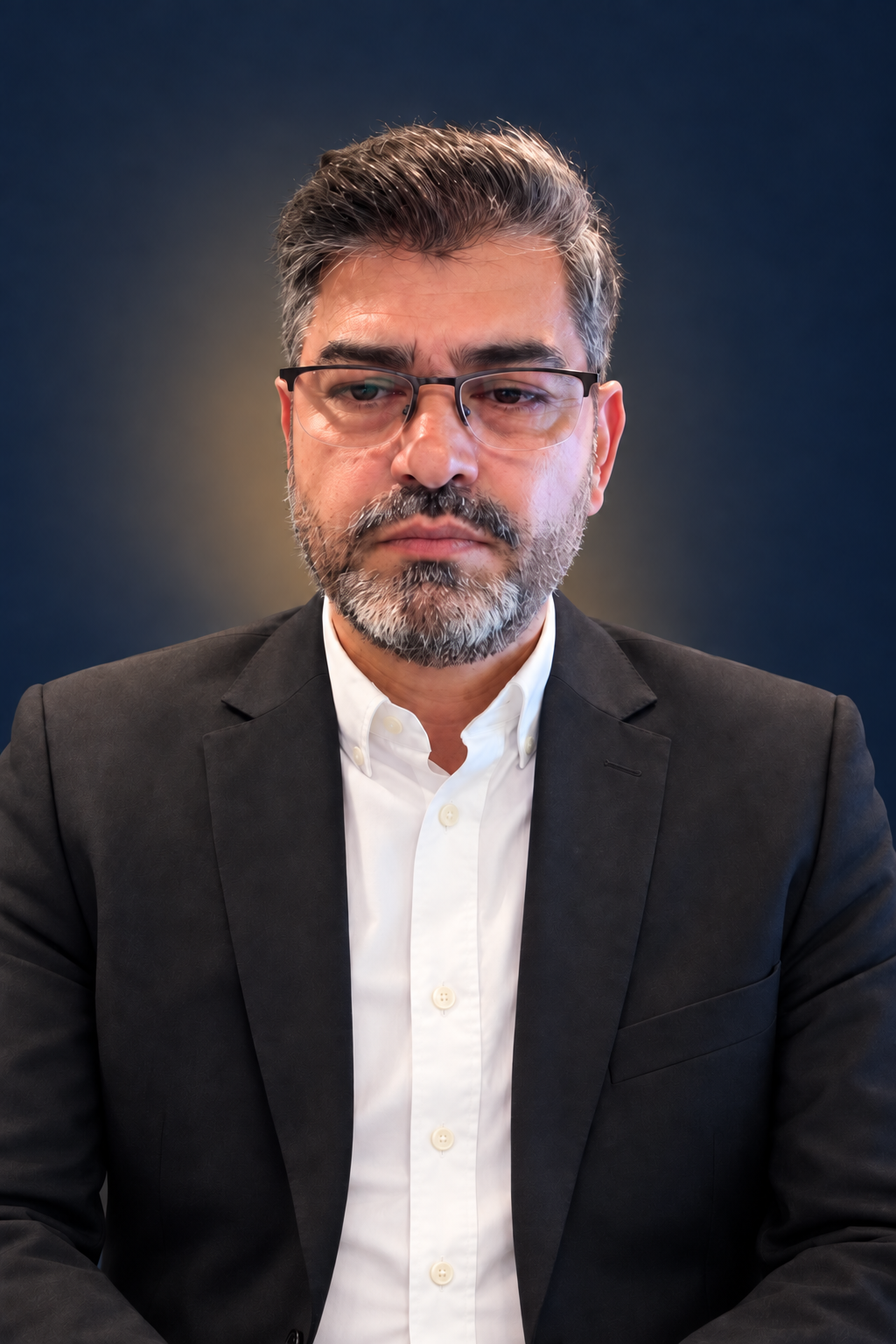
Historian · Author · Public Scholar

History at the frontier of empire, sovereignty and power.

Dr Nabi Sahak is a historian of Anglo-Afghan relations, British India, and the political history of modern South and Central Asia.

PhDWar Studies
King’s College London
FulbrightUS–UK Commission
Scholar
RotaryPeace Fellow
University of Queensland
BBCForeign Field Journalist:
Afghan–Pakistan Borderlands and Surrounding Regions
1997–2002

A historian shaped by archives and lived experience

Dr Nabi Sahak

Raised in Kabul, Dr Nabi Sahak began his career as a BBC journalist, reporting across Afghanistan and Pakistan from 1997 to 2002, during the first five years of Taliban rule. His work with the BBC included extensive field assignments for its educational programming, taking him to 27 of Afghanistan’s provinces, 12 Afghan refugee camps in Pakistan, and internally displaced persons (IDP) centres across Afghanistan. This sustained engagement with communities affected by conflict and political change subsequently informed his scholarly interest in the history of Afghanistan, Pakistan, British India, and modern South and Central Asia.

Dr Sahak earned his BA in Conflict Analysis and Resolution from George Mason University. He then completed an MA in Peace and Conflict Resolution at the University of Queensland as a Rotary Peace Fellow. He later received a US–UK Fulbright Scholarship to undertake doctoral research at King’s College London, where he earned his PhD in War Studies.

His research interests encompass international history, Anglo-Afghan relations, empire and colonialism, war and diplomacy, security studies, sovereignty, borders and frontiers, and the political history of Afghanistan, Pakistan, and modern South and Central Asia.

Education and research training

My academic journey was built step by step, with each degree providing the foundation for the next. Beginning with an Associate of Science (AS) from Northern Virginia Community College (NVCC, USA), I progressed to a BA from George Mason University (USA), an MA from the University of Queensland (Australia), and a PhD in War Studies from King’s College London (UK). This academic progression provided the intellectual foundation for my ongoing scholarly work and culminated in the publication of my monograph, Anglo-Afghan Power and Politics, 1893–1947: The Durand Line Unmasked.

2021

PhD in War Studies (International History)

King’s College London · Faculty of Social Science and Public Policy

Doctoral thesis: The Origins of Anglo-Afghan Relations: Clarification of the Durand Line, 1893–1947. Supervised by Professor Michael Rainsborough and Professor David Martin Jones; examined by Professor Richard Wolf and Professor Faisal Devji. Passed without corrections.

2016

MA in Peace and Conflict Resolution

University of Queensland · Rotary Peace Fellow

Master’s thesis: Survival or Strategy: The Question of Pakistan’s Interference in Afghanistan.

2012

BA in Conflict Analysis and Resolution

George Mason University · Magna Cum Laude · GPA 3.80

2011

Graduate Certificate in Conflict Analysis and Resolution

Jimmy and Rosalynn Carter School for Peace and Conflict Resolution, George Mason University

2010

Associate of Science in General Studies

Northern Virginia Community College

The foundation of Dr Sahak’s higher education in the United States and the beginning of the academic progression that led to his bachelor’s, master’s and doctoral degrees.

Competitive international awards

Published

Anglo-Afghan Power and Politics, 1893–1947: The Durand Line Unmasked

Palgrave Macmillan, 2025

A historical reassessment of the Durand Line and Anglo-Afghan relations from 1893 to the partition of British India in 1947. Drawing on British and Afghan archival and diplomatic sources, the book reconsiders the intentions behind the 1893 mission, the agreements that followed, and the frontier’s contested political meaning. It situates the Durand Line within the wider history of British imperial strategy, Afghan sovereignty, and the geopolitical rivalries that shaped modern South and Central Asia.

View the book at Springer Nature

Book launch and keynote lecture · 16 January 2026

King’s College London

Hosted by Professor Andrew Lambert, the lecture presented the book’s original archival analysis of the 1893 boundary arrangement to faculty and graduate researchers in the Department of War Studies.

Watch the keynote lecture
Senior scholarly endorsements

Six assessments from leading scholars

“The first comprehensive study of the making of the Durand Line”, drawing on “hitherto unknown Afghan sources”.

Faisal Devji · Professor of Indian History, University of Oxford

“Essential reading for anyone seeking a deeper, more nuanced understanding of Anglo-Afghan relations.”

Richard Caplan · Professor of International Relations, University of Oxford

The book “brings Afghanistan back into the South Asian narrative”.

Matthew McCartney · Professor and former Director, Contemporary South Asia Studies Programme, University of Oxford

“Now, at last, Nabi Sahak has filled this gap in an original book of real authority. We should all be in his debt.”

James Mayall, FBA · Emeritus Professor of International Relations, University of Cambridge

“A crucial contribution to our comprehension of a geopolitical fault line.”

James Kurth · Emeritus Professor of Political Science, Swarthmore College

A “rigorous study” offering “a fresh and illuminating perspective”.

Michael Rainsborough · Professor and Academic Principal, Australian War College
Post-publication review · 18 August 2026

“The Durand Line’s Missing History”

Afghan Diaspora Network’s review engages in detail with the monograph’s central archival argument and its reassessment of the surviving documentary record.

Read the review
Scholarly discussion · 31 July 2026

New Books in Central Asian Studies

Discussion of Anglo-Afghan Power and Politics, 1893–1947: The Durand Line Unmasked on the New Books Network, in conversation with Qaseem Ahmadzai.

Listen to the interview

Future Book Projects

Inherited Imperium: The Unfinished Task of Decolonising the Afghan–Pakistan Frontier, 1947–2028

Beginning where The Durand Line Unmasked ends, this study examines how an imperial frontier survived the transfer of sovereignty in 1947 and continued to shape relations among Afghanistan, Pakistan and the Pashtun communities it divides. It investigates the persistence of British imperial structures after decolonisation and the unresolved relationship between territorial sovereignty, political authority and the inherited frontier.

The Orality Trap: How Pashtunwali’s Unwritten Constitution Sustains the Moral Architecture of Law and Memory

This project examines Pashtunwali as an oral and adaptive normative order that has shaped Pashtun understandings of authority, obligation, honour and communal life across successive states and empires. Drawing on historical texts, oral traditions and comparative legal perspectives, it investigates how an enduring system of customary authority operated without a codified constitutional archive.

Scholarly articles

2021

Sahak, Nabi. “How Pakistan’s Calculation to Employ the Taliban in an Anti-Indian Campaign Is Wrong.”

The Round Table: The Commonwealth Journal of International Affairs, 110(5), 732–733.

Read the article
Forthcoming

Sahak, Nabi. “Lessons from History: Afghanistan’s Security Relevance in Medieval South Asia, 1206–1526.”

Afghanistan (Edinburgh University Press).

Contributions to edited volumes

2019

Sahak, Nabi. “Afghanistan: The Pashtun Dimension of the War on Terror.”

In David Martin Jones, Paul Schulte and Carl Ungerer (eds), Handbook of Terrorism and Counter-Terrorism Post 9/11, pp. 181–192. Cheltenham: Edward Elgar Publishing.

View the chapter

Public scholarship

Analysis for policy and public audiences on Afghanistan, conflict and regional politics.

2021

“The Talibanisation of Afghanistan: A Repeat of History in the Making.”

Royal United Services Institute (RUSI).

Read at RUSI
2016

“What the Battle of Kunduz Means for the U.S. and Afghanistan.”

The Fletcher Forum of World Affairs.

Read the article

Teaching across institutions

Teaching and invited lectures on war studies, Afghanistan, diplomacy, borders and conflict resolution.

2018–2026

King’s College London · Department of War Studies

Graduate Teaching Assistant (2018–2021) on the Art of War Studies module, managing seminars and examinations for a cohort of 36 students. Subsequently invited as a recurring guest lecturer by Professor David Martin Jones, teaching graduate and undergraduate cohorts on war studies and contemporary South Asian security.

Watch the 2026 book lecture
2018–2024

Sidney Sussex College, University of Cambridge

Recurring guest lecturer, hosted by Professor James Mayall, FBA, on Anglo-Afghan relations, the Durand Line and post-colonial Afghanistan.

2016–2021

Afghanistan Centre at Kabul University

More than ten invited lectures at the Nancy Hatch Dupree Research Centre on Afghanistan–Pakistan bilateral tensions, the historical evolution of border disputes and regional security frameworks.

2014–2016

University of Queensland

Guest lecturer, hosted by Dr Anne Brown, on peacebuilding frameworks for Afghanistan’s relations with India, China, Russia and Iran, and on the political history of post-colonial Afghanistan.

2010–2018

Jimmy and Rosalynn Carter School for Peace and Conflict Resolution, George Mason University

More than ten guest lectures for graduate and undergraduate seminars on the regional security implications of drone operations, US foreign policy in Afghanistan and NATO-led peacebuilding initiatives.

2015–2018

University of Peshawar and Quaid-i-Azam University

Invited lectures at the Institute of Peace and Conflict Studies on the historical formation of the Durand Line, the administrative evolution of the former North-West Frontier Province and the consequences of decolonisation for regional security.

Lectures, keynotes and policy dialogue

Interviews and media features

Selected conversations on Afghanistan, Pakistan, Pashtunkhwa, the Durand Line and the history of Anglo-Afghan relations.

August 2026

“The Durand Line: Address to Nuhzati Amani (the Amani Movement)”

Invited historical address marking the 107th anniversary of Afghanistan’s independence.

Watch the address
August 2026

“Is the Durand Line Agreement an Authentic Document or a British Fabrication?”

Afghan Diaspora Network · Dari-language scholarly discussion of the archival case developed in Dr Sahak’s monograph.

Watch the discussion
July 2026

“No One Possesses a Document Concerning the Durand Agreement”

SiyaqCasts · Pashto.

Watch the interview
11 July 2026

“No Treaty Called the Durand Agreement Exists; Amir Abdur Rahman Khan Was an Astute and Well-Read King”

Interview hosted by Habib Hotaki · Dari.

Watch the interview
July 2026

“Daryz: Afghanistan–Pakistan Tensions, Hidden Games and Open Accusations”

Panel discussion on Amu TV · Pashto.

Watch the discussion
July 2026

“Cultural Exploration: The Festering Wound of the Treaty of Lahore”

Afghanistan International · Pashto.

Watch the interview
June 2026

“New Academic Research: No Document Known as the Durand Agreement Exists”

Wesal TV · Pashto.

Watch the interview
9 September 2021

“Afghanistan: Has Our World Just Got More Dangerous?”

Expert panellist on Taking Apart Terror, produced by Fresh Air Production for the Global Coalition Against Daesh and hosted by Adnan Sarwar.

Listen to the discussion
2016

“In Pursuit of Peace: From Wartime Journalism to Academic Excellence”

Documentary feature and scholarly profile by the University of Queensland.

Watch the profile

Afghanistan’s history in documentary perspective

Recorded lectures and companion essays examining Afghanistan’s modern history, Anglo-Afghan relations, the nineteenth-century Great Game in Asia, the Anglo-Afghan Wars and the Durand Line through treaties, archival records, maps and diplomatic correspondence.

View the English series
Introductory lecture

Introducing the Book and the New Historical Lecture Series

An introduction to the research programme, its documentary method and the central historical question: what was the original purpose of the 1893 Durand Line arrangement?

Watch the lecture
Companion article

“Launching a New Historical Lecture Series”

The full introductory essay traces the convergence of British and Russian imperial expansion, explains the archival problem surrounding the Durand Mission and outlines the chronological programme of lectures to follow.

Read the article
Series introduction

English Introduction to the Book and YouTube Channel

A concise introduction to Dr Sahak’s monograph, research interests and multilingual programme of academic lectures and historical analysis.

Watch the introduction

Historical scholarship for Pashto-speaking audiences

A Pashto-language programme presenting archival research on Afghanistan, Anglo-Afghan relations, imperial frontier-making and the history of the Durand Line.

Lecture 1

Introduction to the Historical Lecture Series and The Durand Line Unmasked

The opening Pashto lecture introduces the book, the research programme and the documentary questions that structure the series.

Watch the Pashto lecture
Corresponding article

Pashto companion article

The accompanying Pashto article will be published here as the series develops.

Historical scholarship for Dari-speaking audiences

A Dari-language programme extending the same research-led, documentary approach to Afghanistan’s modern history, regional diplomacy and contested frontiers.

Lecture 1

Introduction to the Historical Lecture Series and The Durand Line Unmasked

The opening Dari lecture introduces the monograph, the purpose of the multilingual series and the primary-source approach guiding the lectures.

Watch the Dari lecture
Corresponding article

Dari companion article

The accompanying Dari article will be published here as the series develops.

Research and professional languages

PashtoNativeDari / Persian / TajikiNativeUrdu / HindiFluentArabicAdvanced literacyRussianWorking proficiency

Research, lectures and media enquiries

For academic collaboration, speaking invitations, interviews or book-related correspondence.

nsahak.research@gmail.com